
February 13, 2026
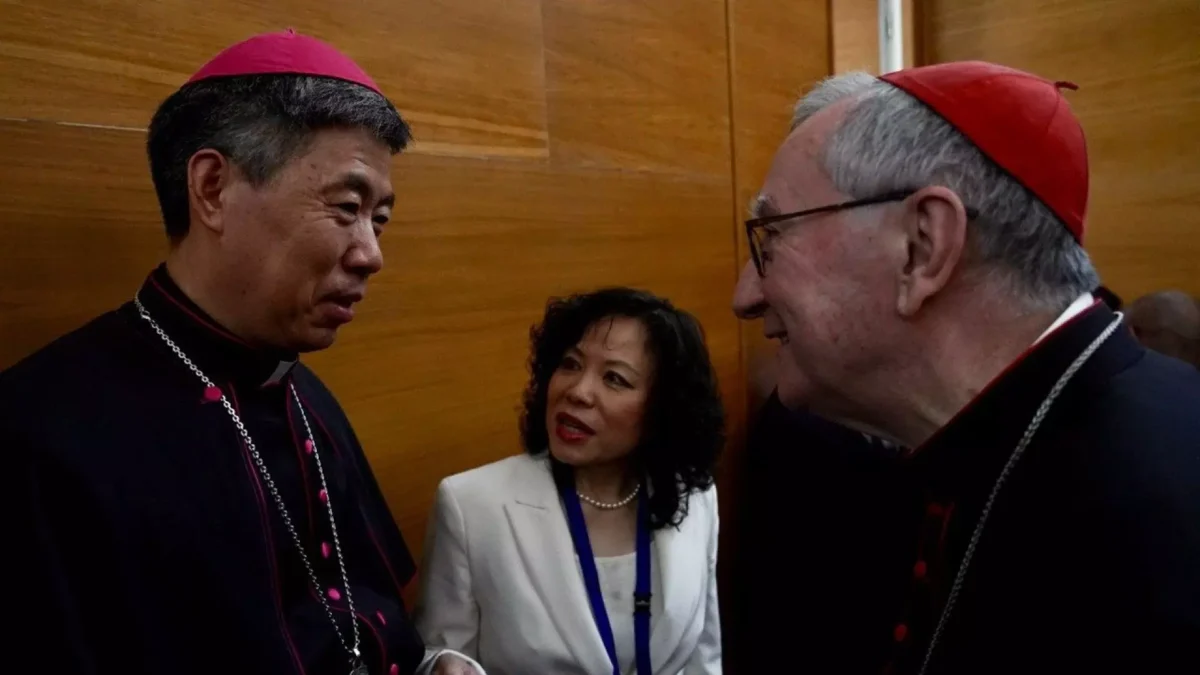
This question is on the minds of many Catholic faithful around the world. How can Rome view the Society of Saint Pius X (SSPX) episcopal consecrations, scheduled for July 1st, with severity, while simultaneously recognizing, tolerating, or retroactively endorsing appointments imposed by the Chinese Communist Party?
This is not an artificial parallel. The facts are public, repeated, and documented. For years, the Chinese Communist government—officially atheist, doctrinally materialistic, and structurally hostile to the social kingship of Christ—has directly interfered in the appointment of bishops. It does so not to serve the Church, but to control it. It does not do this to protect the faith, but to control it, monitor it, and steer it according to the interests of an ideological state.
And yet, faced with these serious interferences in the divine constitution of the Church, Rome engages in dialogue, negotiations, and compromise. It even goes so far as to recognize certain appointments made unilaterally, without papal mandate, in the name of a diplomatic pragmatism presented as necessary for the good of souls, to preserve the agreement signed in 2018 between the Beijing government and the Holy See.
They then invoke the context. They speak of realism. They explain that a total break must be avoided, a channel maintained, and what can still be preserved of Catholic life in an environment of persecution.
But then the question arises: why would this reasoning, acceptable in the face of a communist power, become unacceptable in the face of the SSPX?
Because, ultimately, what is the intention of the SSPX? To serve a state? To found a national church? To promote an ideology foreign to the Faith? Obviously not. Its sole purpose is the safeguarding of the Catholic priesthood, the integral transmission of the Faith, the defense of the Traditional Latin Mass, and the protection of souls in an unprecedented crisis for the Church.
When the SSPX speaks of the need for bishops, it is not referring to territorial or personal jurisdiction. It is speaking of confirmations, ordinations, and sacramental continuity. It is speaking of the concrete survival of a priesthood formed according to doctrine of all time. It is speaking of the right of the faithful to receive the sacraments in their doctrinal and liturgical integrity.
The objective is radically different. On the one hand, an atheist power imposes bishops to subjugate the Church. On the other, a priestly society envisions bishops to preserve the faith and the sacraments. To place these two realities on the same disciplinary level, without considering the intention or the context of the crisis of the Church, would amount to applying the law in an abstract way, detached from the end for which it exists: the salvation of souls.
Yet it is precisely this principle that Rome invokes in China. They would accept an imperfect situation to preserve a greater good. Is the good of souls less at stake when it comes to Tradition? Is the danger to the Faith less when the faithful are deprived of confirmations, ordinations, and priests trained according to the Church’s constant doctrine?
Who can seriously maintain that the threat to souls comes more from the SSPX than from a communist state apparatus that imprisons faithful bishops, monitors seminaries, and rewrites doctrine in the light of Marxism?
The disproportion is so great that it troubles many of the faithful, far beyond the ranks of Tradition. They see the patience shown toward Beijing. They also see, in parallel, the restrictions, pressures, and suspicions weighing on traditional communities. They observe that there is widespread tolerance where faith is threatened by state atheism, but intransigence where it is defended in its integrity.
This is not about challenging the authority of the Holy See, nor about denying its right to appoint bishops. It is about recalling that the exercise of this authority is always in accordance with the order of the salvation of souls, which remains the supreme law of the Church.
If, in order to preserve this salvation, Rome can recognize canonically irregular situations in China, how could it consider as a greater danger consecrations motivated solely by the safeguarding of the priesthood and Tradition?
The Holy Father knows—and the SSPX has always affirmed this—that this is not about establishing a parallel hierarchy or usurping jurisdiction. It is an act of necessity in a context of widespread doctrinal and liturgical crisis, comparable in principle to other extraordinary measures taken in the history of the Church when the Faith was gravely threatened.
Ultimately, the question posed is not disciplinary but ecclesial and doctrinal. It concerns how the authorities perceive the current crisis. If the Church’s crisis is recognized in its gravity, certain exceptional measures become understandable. If it is minimized, they appear intolerable.
The answer now lies with Rome.
(Sources : Info Vaticana – FSSPX Actualités)
Illustration : Vatican News